
Best j*** recordings of all time
Posted by: mikeeschman on 22 May 2010
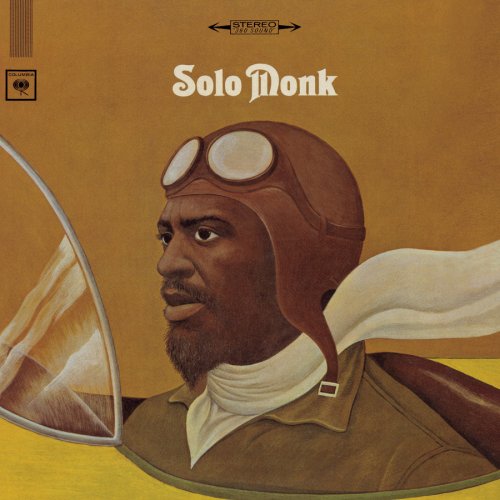
Inspired, authentic, unique, original and deeply moving :-)
Posted on: 25 May 2010 by fred simon
quote:Originally posted by Lontano:quote:Originally posted by fred simon:quote:Originally posted by Lontano:
I am rather partial to Pat Metheny's Lonely Woman on his Rejoicing album
Different Lonely Woman. It's by Horace Silver.
Whoops!
But also a beautiful tune, and a great performance.
Posted on: 26 May 2010 by vlada

Posted on: 26 May 2010 by mikeeschman
I just ordered "Earl Hines plays Duke Ellington", because I love both Earl Hines and Duke Ellington, and have a current fixation on jazz piano.
Anyone here familiar with this album?
Anyone here familiar with this album?
Posted on: 26 May 2010 by Fabio 1
Hi Jwm,
I own Brubeck's "Time out" on Classic Records sv-p 200 gr.Do you have it too or have you ever listened at it?If yes,do you think your earlier copy pressing is better?
Thank you.
fabio
I own Brubeck's "Time out" on Classic Records sv-p 200 gr.Do you have it too or have you ever listened at it?If yes,do you think your earlier copy pressing is better?
Thank you.
fabio
Posted on: 26 May 2010 by mikeeschman
"Monk Alone in San Francisco" came today. It is a lot of fun. Great pair with "Solo Monk".
It's making for a fun evening.
It's making for a fun evening.
Posted on: 26 May 2010 by DeltaSigma
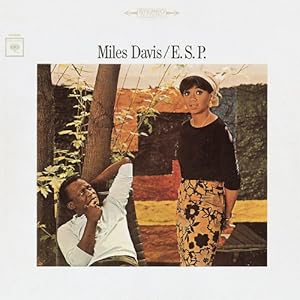
Just thought that a thread like this one wouldn't be complete without this album, or any of the others produced by Miles Davis' Second Great Quintet between 1965-8 ( Miles Smiles, Sorcerer, Nefertiti and Miles In The Sky). The music may not be easily accessible on the first hearing, but just about every track on these records is pure magic IMV. Highly Recommended once one has digested Kind of Blue, MilesStones and Round About Midnight. I don't think there has ever been an interval of more than a few days in the past several years between a listening session with at least one of these.
In addition, Filles de Kilimanjaro and In a Silent Way, which followed those named above and which showcased Davis' transition from traditional post bop music and experimentation with electric instruments are also brilliant and worthy (IMO) of serious consideration for inclusion on the list of all time great jazz recordings.
Posted on: 26 May 2010 by Hook
At age 53, am a long-time rock and folk guy. Also got into world music (West African, Celtic and Latin mostly) about ten years ago.
A couple of years ago, the album that finally led me to jazz was Yusef Lateef's "Jazz 'Round The World" (Impulse A-56, 1963).
Jazz improv meets non-Western melodies. Yusef plays sax, flute, oboe, bassoon,and a bunch of instruments I had to google: shanai, shofar, arghl, sarewa, koto and more. Just wonderful!
Hook
PS - Am up to about 100 jazz titles, and enjoy the 50s-60's hard bop stuff the most. Art Pepper, Jazz Messengers, etc. Am having a harder time getting my head and ears around modal jazz, avant garde, etc. Perhaps an acquired taste?
A couple of years ago, the album that finally led me to jazz was Yusef Lateef's "Jazz 'Round The World" (Impulse A-56, 1963).
Jazz improv meets non-Western melodies. Yusef plays sax, flute, oboe, bassoon,and a bunch of instruments I had to google: shanai, shofar, arghl, sarewa, koto and more. Just wonderful!
Hook
PS - Am up to about 100 jazz titles, and enjoy the 50s-60's hard bop stuff the most. Art Pepper, Jazz Messengers, etc. Am having a harder time getting my head and ears around modal jazz, avant garde, etc. Perhaps an acquired taste?
Posted on: 26 May 2010 by DeltaSigma
quote:PS - Am up to about 100 jazz titles, and enjoy the 50s-60's hard bop stuff the most. Art Pepper, Jazz Messengers, etc. Am having a harder time getting my head and ears around modal jazz, avant garde, etc. Perhaps an acquired taste?
I wouldn't describe it as an acquired taste as much as a sort of progression. I actually started with modal jazz like Kind of Blue, some of the music on Milestones and A Love Supreme, then moving on to some of the other Davis/Coltrane releases of the early 1960s. I have to admit that it took me a year or so to get my ears around the post bob stuff described above but my experience with modal jazz was very helpful, I think.
TBH, the avant garde music of Ornette Coleman, Eric Dolphy, et al also remained a closed book to me for some time but was much easier to understand once I was able to appreciate the music of Miles Davis' Second Quintet. There may be some necessary investment of time in acquainting oneself with the language of some of this music but it is well worth it in my view. It has certainly enriched my life no end.
P.S. - The Yusef Lateef album you described above sounds interesting.
Posted on: 26 May 2010 by DeltaSigma

Another example of really excellent jazz with a latin flavour produced by one of my favourite trumpeters - I'm currently enjoying it as I type this

Posted on: 27 May 2010 by irwan shah
quote:Originally posted by mikeeschman:
I just ordered "Earl Hines plays Duke Ellington", because I love both Earl Hines and Duke Ellington, and have a current fixation on jazz piano.
Anyone here familiar with this album?
Just dug it out from my cassette collection. A college friend of mine made a copy of the album for me, from CD in two cassettes way back in 1989. Looks like chrome cassettes can really last. (Rudy, if you are reading this post, thanks man) Played in a walkman, with a mini jack from the walkman into the Supernait's RCA input.
Posted on: 27 May 2010 by mikeeschman
quote:Originally posted by irwan shah:quote:Originally posted by mikeeschman:
I just ordered "Earl Hines plays Duke Ellington", because I love both Earl Hines and Duke Ellington, and have a current fixation on jazz piano.
Anyone here familiar with this album?
Just dug it out from my cassette collection. A college friend of mine made a copy of the album for me, from CD in two cassettes way back in 1989. Looks like chrome cassettes can really last. (Rudy, if you are reading this post, thanks man) Played in a walkman, with a mini jack from the walkman into the Supernait's RCA input.
Irwan, what did you think of it?
Posted on: 27 May 2010 by irwan shah
quote:Originally posted by mikeeschman:quote:Originally posted by irwan shah:quote:Originally posted by mikeeschman:
I just ordered "Earl Hines plays Duke Ellington", because I love both Earl Hines and Duke Ellington, and have a current fixation on jazz piano.
Anyone here familiar with this album?
Just dug it out from my cassette collection. A college friend of mine made a copy of the album for me, from CD in two cassettes way back in 1989. Looks like chrome cassettes can really last. (Rudy, if you are reading this post, thanks man) Played in a walkman, with a mini jack from the walkman into the Supernait's RCA input.
Irwan, what did you think of it?
Very 'old school' jazz. Still nice to listen to. But I have moved on since those days. It is now just nostalgic for me to listen to it. After re-listening to it after all these years, I realise that if one chose this album as a representative sample of jazz, it would seem as if bebop never happened. It is still beautiful as Hines has God like technical skills on the piano. He sounds so effortless whilst performing difficult pieces. He also does Keith Jarrett like mumbles, although much less audible. Ellington can be interpreted in a much different way (e.g. through a big band) and I enjoy the Duke himself playing his songs, with the help of Billy Strayhorn of course.
The Anouor Brahem has been set aside. Now with the walkman playing Hines through the old Cambridge Audio Mk II Booster. It sounded a lot better very early this morning when played through the Supernait.

Posted on: 27 May 2010 by Hook
I just love a good controversy, even if it is from 1962!
Check out this comment from the liner notes written by Dudley Williams on the back of Stanly Turrentine's "That's Where It's At" (Blue Note BST-84096):
"The Turrentine tenor displays none of the weak-kneed and frazzle-buttocked bleatings of many sax deviates, but relies on the truly large tone of the big tenor sounds of the old masters. Yet this adherence to the big sound is tempered by a tastefully modern approach to the contemporary scene."
This is a wonderful bluesy jazz record, but the liner notes alone are worth the purchase price.
Hook
Check out this comment from the liner notes written by Dudley Williams on the back of Stanly Turrentine's "That's Where It's At" (Blue Note BST-84096):
"The Turrentine tenor displays none of the weak-kneed and frazzle-buttocked bleatings of many sax deviates, but relies on the truly large tone of the big tenor sounds of the old masters. Yet this adherence to the big sound is tempered by a tastefully modern approach to the contemporary scene."
This is a wonderful bluesy jazz record, but the liner notes alone are worth the purchase price.
Hook
Posted on: 27 May 2010 by graham halliwell
Couldn't agree more about the Miles Davis Quintet, and ESP in particular.
For me jazz is such a great music because it relies heavily on ideas, intuition and spontaneity. In other words it's very human.
Miles's ESP is a case in point; it can be listened to on many different levels. You can hear each musician introducing fresh, nuanced ideas, yet playing as though their lives depended upon it. There is a sense of hyper alertness, music of the moment. Tony Williams is phenomenal. I'll never tire of trying to fathom his polyrhythmic patterns, and how he influences the direction of each soloist. And how Wayne Shorter plays such wide intervalic lines so fluently and melodically inside and outside the harmonic structure. Over 45 years old and it still sounds fresh.
FWIW, as a listener, once i got my head around the idea of intuition in jazz, instead of getting bogged down in its technicalities, the flood gates opened to appreciating and enjoying such things as late Ornette Coleman and Coltrane, as well as people such as Albert Ayler and Sun Ra.
For me jazz is such a great music because it relies heavily on ideas, intuition and spontaneity. In other words it's very human.
Miles's ESP is a case in point; it can be listened to on many different levels. You can hear each musician introducing fresh, nuanced ideas, yet playing as though their lives depended upon it. There is a sense of hyper alertness, music of the moment. Tony Williams is phenomenal. I'll never tire of trying to fathom his polyrhythmic patterns, and how he influences the direction of each soloist. And how Wayne Shorter plays such wide intervalic lines so fluently and melodically inside and outside the harmonic structure. Over 45 years old and it still sounds fresh.
FWIW, as a listener, once i got my head around the idea of intuition in jazz, instead of getting bogged down in its technicalities, the flood gates opened to appreciating and enjoying such things as late Ornette Coleman and Coltrane, as well as people such as Albert Ayler and Sun Ra.
Posted on: 27 May 2010 by DeltaSigma
quote:Originally posted by graham halliwell:
Couldn't agree more about the Miles Davis Quintet, and ESP in particular.
For me jazz is such a great music because it relies heavily on ideas, intuition and spontaneity. In other words it's very human.
Miles's ESP is a case in point; it can be listened to on many different levels. You can hear each musician introducing fresh, nuanced ideas, yet playing as though their lives depended upon it. There is a sense of hyper alertness, music of the moment. Tony Williams is phenomenal. I'll never tire of trying to fathom his polyrhythmic patterns, and how he influences the direction of each soloist. And how Wayne Shorter plays such wide intervalic lines so fluently and melodically inside and outside the harmonic structure. Over 45 years old and it still sounds fresh.
FWIW, as a listener, once i got my head around the idea of intuition in jazz, instead of getting bogged down in its technicalities, the flood gates opened to appreciating and enjoying such things as late Ornette Coleman and Coltrane, as well as people such as Albert Ayler and Sun Ra.
Well said - I couldn't have put it any better myself. I especially agree with the suggestion of not getting too bogged down with technicalities - IMO that is completely unnecessary for thoroughly enjoying this music (although I have to confess that some of Fred Simon's posts have made me somewhat more curious about music theory)
Posted on: 28 May 2010 by fred simon
quote:Originally posted by jazzfan:
Well said - I couldn't have put it any better myself. I especially agree with the suggestion of not getting too bogged down with technicalities - IMO that is completely unnecessary for thoroughly enjoying this music (although I have to confess that some of Fred Simon's posts have made me somewhat more curious about music theory)
I absolutely agree ... technical knowledge isn't necessary at all for musical enjoyment.
But I hope everyone understands that neither will technical knowledge diminish musical enjoyment, nor will it interfere with intuition. It will only serve to enhance and illuminate musical enjoyment.
Posted on: 28 May 2010 by graham halliwell
"But I hope everyone understands that neither will technical knowledge diminish musical enjoyment, nor will it interfere with intuition. It will only serve to enhance and illuminate musical enjoyment"
Without wishing to derail this thread, I couldn't agree more. IMO even a basic undersatding of harmony and theory greatly enhances listening skills. And the best way to learn theory is to learn to play an instrument. I think one of the main problems people have with this is that they want to be brilliant, and don't want to feel second rate or a failure. But what isn't understood enough, again in my experience, is that playing and learning music opens your ears and mind to a greater diversity of music. I see it as an investment. And that can't be a bad thing, can it?
The point I maybe didn't make clearly enough above is that in my experience great music and musicians move beyond theory. (I think Mingus called it muscle memory; Morton Feldman called it intuition; and so on....)
Without wishing to derail this thread, I couldn't agree more. IMO even a basic undersatding of harmony and theory greatly enhances listening skills. And the best way to learn theory is to learn to play an instrument. I think one of the main problems people have with this is that they want to be brilliant, and don't want to feel second rate or a failure. But what isn't understood enough, again in my experience, is that playing and learning music opens your ears and mind to a greater diversity of music. I see it as an investment. And that can't be a bad thing, can it?
The point I maybe didn't make clearly enough above is that in my experience great music and musicians move beyond theory. (I think Mingus called it muscle memory; Morton Feldman called it intuition; and so on....)
Posted on: 28 May 2010 by DeltaSigma
I would certainly agree that some understanding of theory would help in opening up the mind to different types of music, as many genres that would appear to the uneducated listener to be unrelated are in fact linked. As has been mentioned in another current thread, jazz itself is a hybrid of European and West African musical styles.
The suggestion re. learning to play an instrument as a way of getting some grasp of music theory is certainly a good one. I did take some basic guitar and violin lessons years ago in high school but have forgotten everything I learnt at that time. Maybe it's time for a refresher...
The suggestion re. learning to play an instrument as a way of getting some grasp of music theory is certainly a good one. I did take some basic guitar and violin lessons years ago in high school but have forgotten everything I learnt at that time. Maybe it's time for a refresher...
Posted on: 30 May 2010 by Berend
A great recording from 1959 Kenny Burrell and Art Blakey - On view at the Five Spot Cafe

Posted on: 30 May 2010 by GraemeH
quote:Originally posted by Berend:
A great recording from 1959 Kenny Burrell and Art Blakey - On view at the Five Spot Cafe
If you like this try 'A Night at the Vanguard' with Roy Haines on drums - even better IMHO.
Graeme
Posted on: 30 May 2010 by Berend
quote:Originally posted by Graeme Hutton:
[QUOTE]Originally posted by Berend:
A great recording from 1959 Kenny Burrell and Art Blakey - On view at the Five Spot Cafe
If you like this try 'A Night at the Vanguard' with Roy Haines on drums - even better IMHO.
Graeme
Graeme,
I own this record, and I like it very much. I'm not sure if I like it as much "On view at the Five Spot Cafe". But I agree with you, both recordings are great.
Another CD of Kenny Burrell I like very much is
Kenny Burrell & The Guitar Jazz Band

Posted on: 31 May 2010 by fred simon
quote:Originally posted by graham halliwell:
"But I hope everyone understands that neither will technical knowledge diminish musical enjoyment, nor will it interfere with intuition. It will only serve to enhance and illuminate musical enjoyment"
The point I maybe didn't make clearly enough above is that in my experience great music and musicians move beyond theory. (I think Mingus called it muscle memory; Morton Feldman called it intuition; and so on....)
Another way of saying this is that great musicians don't move beyond theory so much as assimilate it to the point of total, transparent integration ... all the theoretical components of the music are still there, but the best musicians are certainly not consciously thinking about them. It's very much like spoken/written language ... when we speak conversationally, for instance, we don't consciously think about word choice, syntax, paragraph structure, etc. It's that kind of seamless integration that the best musical improvisers have.
Muscle memory is a part of it, intuition is certainly a big part of it, but they are both informed, albeit transparently, by the data bank of theoretical knowledge, even in cases of brilliant yet unschooled musicians who never formally learned the theoretical aspects, yet have come to integrate them through repeated experience.
What I tell my students, and the way it works for me on a good day, is that after assimilating all the theoretical data you forget about it and return to playing by ear ... the fingers play what the ear hears.
Posted on: 31 May 2010 by fred simon
quote:Originally posted by jazzfan:
The suggestion re. learning to play an instrument as a way of getting some grasp of music theory is certainly a good one. I did take some basic guitar and violin lessons years ago in high school but have forgotten everything I learnt at that time. Maybe it's time for a refresher...
I'll bet that you actually haven't forgotten everything you had learned ... you'd be surprised by how much of it you had retained and would come back very quickly. It's very much the "bicycle effect" ... you learn as a kid, and even if you don't ride one for decades, you still know how.
Posted on: 01 June 2010 by GraemeH
quote:Originally posted by Berend:quote:Originally posted by Graeme Hutton:
[QUOTE]Originally posted by Berend:
A great recording from 1959 Kenny Burrell and Art Blakey - On view at the Five Spot Cafe
If you like this try 'A Night at the Vanguard' with Roy Haines on drums - even better IMHO.
Graeme
Graeme,
I own this record, and I like it very much. I'm not sure if I like it as much "On view at the Five Spot Cafe". But I agree with you, both recordings are great.
Another CD of Kenny Burrell I like very much is
Kenny Burrell & The Guitar Jazz Band
Thanks - Do you have his work with Gill Evans? Absolutely superb IMHO.
Graeme
Posted on: 02 June 2010 by CHP

This album was recorded live in february 1960 and released the same year. Berlin was isolated in the middle of the communism block. The atmosphere in this album is simply magic.
Inducted into the grammy hall of fame in 1999