
Nice Photos.
Posted by: u5227470736789439 on 27 February 2008
Here is my candidate as being almost quite good. In fact it is two painstakingly joined.

Taken up in the mountain at Skurdalsvatn in 2000.
Though this one takien in Warsaw in November 2006 is not bad:

I know there are several good photgraphers here, and it would be nice to see some of you best efforts if you feel inclined to share!
George


 Pitigliano,Tuscany.

Concrete dynosaur,may I?
Fabio 1 posted:Concrete dynosaur,may I?
It is indeed - and a costly one too. Several of these bridges were built in the nineties to basically "bridge" the rural coastal communities with the mainland. Our continental coastline is about 25 148 km long and many of these communities still exists thanks to transportation based on fossil fuels. These bridges together with off-shore servicing, fish farming, fishing and daily commute to the larger towns makes it possible to have a somewhat decentralized population. The main way of transportation is based on the car and there is no viable alternative.
That's an interesting explanation.
This is photograph of a photograph, but the painting is now believed to date from 36,000 years ago (twice as old as those at Lascaux). Just incredible. The oldest human art known to exist. The artists even used the contours of the wall to make the images appear to move when lit by the flickering flames of a torch or fat-lamp.
Caverne du Pont d'Arc (Chauvet Cave), discovered in 1994 having been sealed for at least 21,000 years by successive rock-falls.
The entire thing has been recreated from digitised 3d photographs and measurements, and cast in resin and concrete, printed and painted to make an exact duplicate which you can visit. I didn't think a 'fake' could impress me, but this really did!

rodwsmith posted:This is photograph of a photograph, but the painting is now believed to date from 36,000 years ago (twice as old as those at Lascaux). Just incredible. The oldest human art known to exist. The artists even used the contours of the wall to make the images appear to move when lit by the flickering flames of a torch or fat-lamp.
Caverne du Pont d'Arc (Chauvet Cave), discovered in 1994 having been sealed for at least 21,000 years by successive rock-falls.
The entire thing has been recreated from digitised 3d photographs and measurements, and cast in resin and concrete, printed and painted to make an exact duplicate which you can visit. I didn't think a 'fake' could impress me, but this really did!
That is remarkable! So much of the later cultural artifacts seems so much cruder. Thanks for posting!
rodwsmith posted:This is photograph of a photograph, but the painting is now believed to date from 36,000 years ago (twice as old as those at Lascaux). Just incredible. The oldest human art known to exist. The artists even used the contours of the wall to make the images appear to move when lit by the flickering flames of a torch or fat-lamp.
Caverne du Pont d'Arc (Chauvet Cave), discovered in 1994 having been sealed for at least 21,000 years by successive rock-falls.
The entire thing has been recreated from digitised 3d photographs and measurements, and cast in resin and concrete, printed and painted to make an exact duplicate which you can visit. I didn't think a 'fake' could impress me, but this really did!
Probably the first stock market analysis ever, using bulls and bears as symbols for anticipated directions.
A bridge too far

Mr Fjeld posted:A bridge too far
Nice one Christian! Where was that taken?
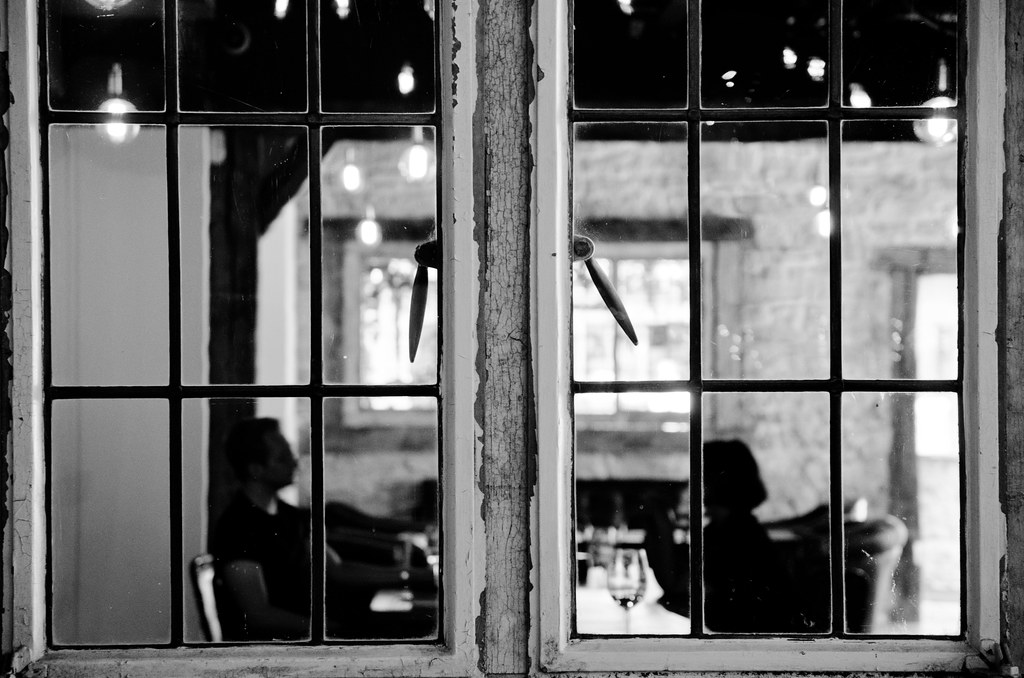
Window onto a Conversation:
Van Buren

Kevin-W posted:Mr Fjeld posted:A bridge too far
Nice one Christian! Where was that taken?
Thanks Kevin - much appreciated 
It's from the Rong straits on the west coast outside the town of Bergen. It's a beautiful barren and wild place.
And finally the last bridge photo for a while 
rodwsmith posted:This is photograph of a photograph, but the painting is now believed to date from 36,000 years ago (twice as old as those at Lascaux). Just incredible. The oldest human art known to exist. The artists even used the contours of the wall to make the images appear to move when lit by the flickering flames of a torch or fat-lamp.
Caverne du Pont d'Arc (Chauvet Cave), discovered in 1994 having been sealed for at least 21,000 years by successive rock-falls.
The entire thing has been recreated from digitised 3d photographs and measurements, and cast in resin and concrete, printed and painted to make an exact duplicate which you can visit. I didn't think a 'fake' could impress me, but this really did!
Funnily enough we’re in the vicinity of Lascaux right now and I would like to visit, not sure I can convince the family. Though anything to get out of the 39* heat may sway them...
There is a recreation of Lascaux, but it is neither as comprehensive nor convincing as the Chauvet facsimile (which was made recently with no expense spared and state-of-the-art technology). Perhaps it is at least air-conditioned!
The experience of opening the actual Lascaux cave to the public caused the exhaled CO2 and other human influences to create acids, mildews, and even a particular mould, which have all but destroyed the paintings. It has been closed for decades now. Hence Chauvet is sealed and opened only for suitably equipped masked and covered scientists and even then not very often. The exception was the film-maker Werner Herzog who was allowed to make a 3d Documentary - which was in part used for the facsimile along with all the various other measurements and photographs.
Worth watching: Cave of Forgotten Dreams. (Links to Wikipedia entry. Film is on Youtube and Netflix in some countries.)
More of the images:


Notre Damme Lucon
Night before:

Morning after:

Saône River, St Jean de Losnes.

The cutting edge


Cristiania, Copenhagen.
Shelter