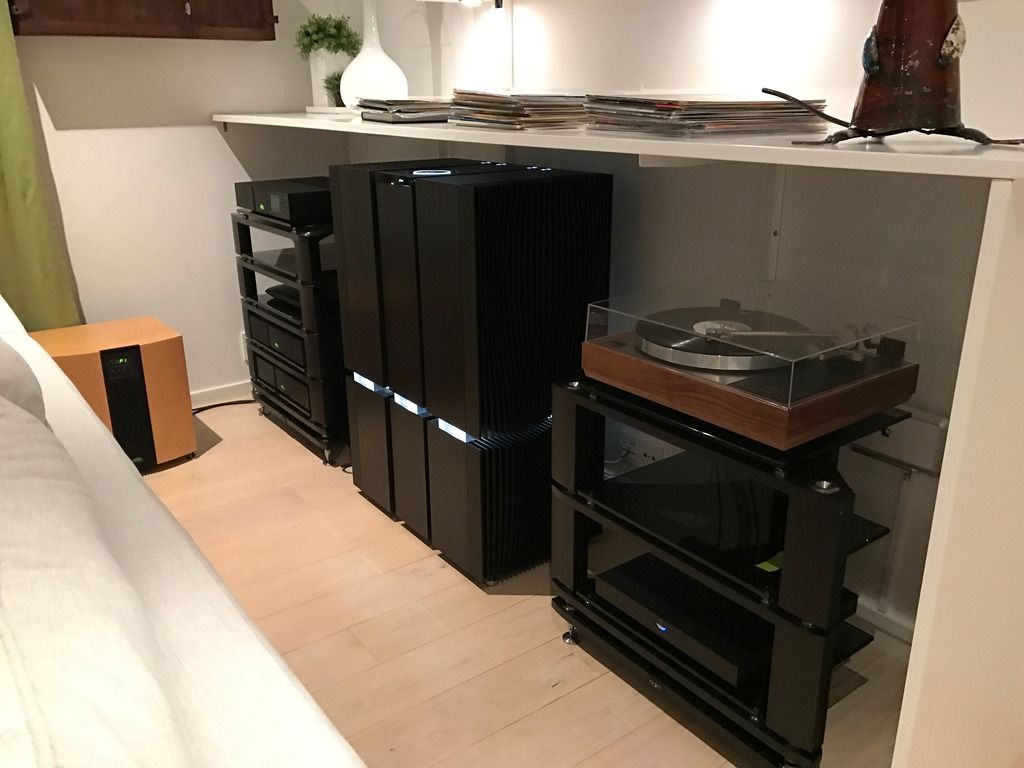
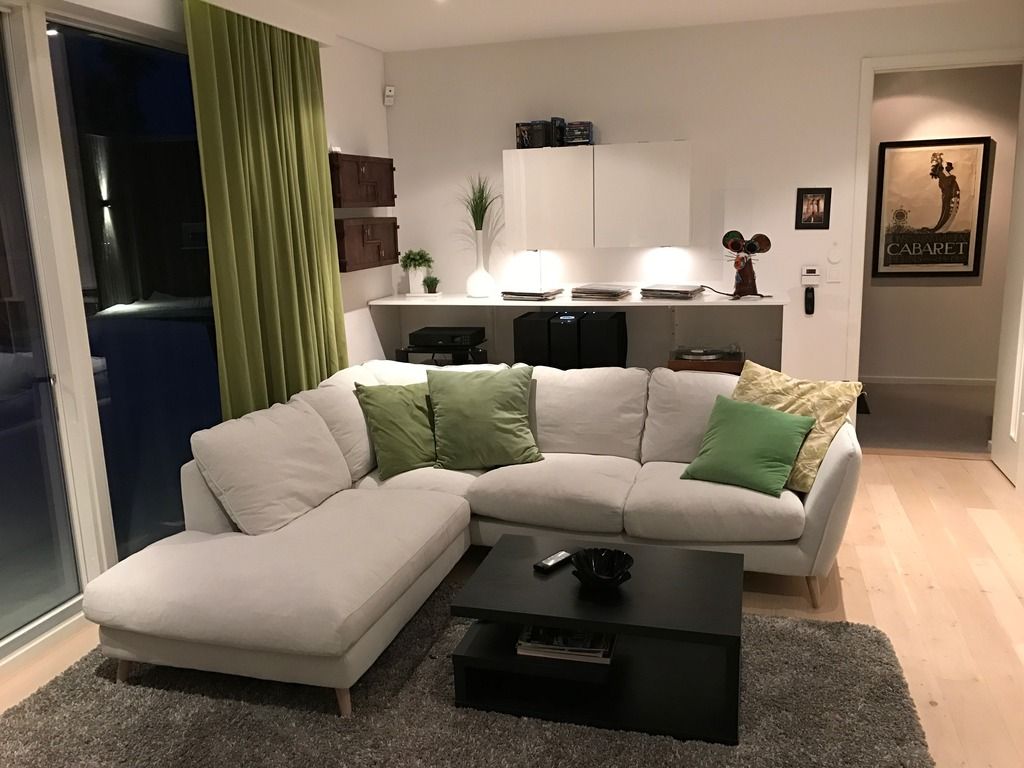
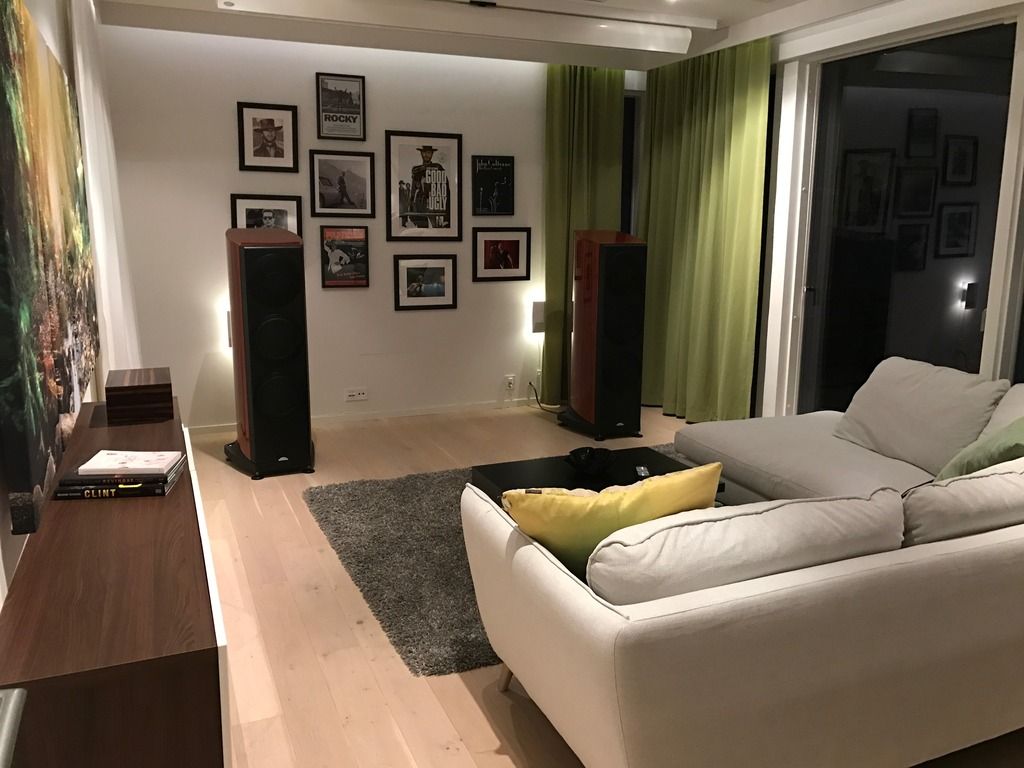
Welcome to System Pics 2017. To get us started here is a picture of my setup: other than longer legs on the rack and some new wires, it's just the same as last year.
Pics of my current setup, courtesy of my realtor. Since adding the Track Audio stands, I am blissfully happy.
Very, very nice.
Posted on: 22 March 2017 by Clay Bingham
Agree 100%. A beautiful space.
Posted on: 22 March 2017 by rightcoastants
Merci beaucoup. I can take credit for the decor but not the photos. For cosmetic reasons, I would like to try replace the Isoblue to match the finish on the speakers.
Posted on: 22 March 2017 by u77033103172058601
Or change the speakers to match the isoblue?
Posted on: 22 March 2017 by nigelb
In case you are considering refinishing your Isoblue yourself I suggest you read Donkeyhaute cautionary tale above!
Could get messy.
Posted on: 24 March 2017 by Jeroen20
Hi,
This week my new NAC-N272 and NAP200 arrived. I am really excited about my new system, I am coming from a Mu-So (years ago I had separates from Quad and Marantz). So this is a big step forwards. I was able to get a good deal on a second hand pair of S400's.
I want to experiment with the speaker position to see how that affect the sound in my room. Also, I want to arrange the cables better.
The rack is an old Soundstyle rack I bought some 12 years ago. I really like the wooden racks I have seen on this forum. So that is probably the first thing I want to change.
Regards,
Jeroen.
Posted on: 24 March 2017 by Stevee_S
Jeroen20 posted:
Hi,
This week my new NAC-N272 and NAP200 arrived. I am really excited about my new system, I am coming from a Mu-So (years ago I had separates from Quad and Marantz). So this is a big step forwards. I was able to get a good deal on a second hand pair of S400's.
I want to experiment with the speaker position to see how that affect the sound in my room. Also, I want to arrange the cables better.
The rack is an old Soundstyle rack I bought some 12 years ago. I really like the wooden racks I have seen on this forum. So that is probably the first thing I want to change.
Regards,
Jeroen.
Congratulations Jeroen, your new system, room and view look wonderful, enjoy!
Steve
Posted on: 24 March 2017 by james n
Stevee_S posted:
Jeroen20 posted:
Hi,
This week my new NAC-N272 and NAP200 arrived. I am really excited about my new system, I am coming from a Mu-So (years ago I had separates from Quad and Marantz). So this is a big step forwards. I was able to get a good deal on a second hand pair of S400's.
I want to experiment with the speaker position to see how that affect the sound in my room. Also, I want to arrange the cables better.
The rack is an old Soundstyle rack I bought some 12 years ago. I really like the wooden racks I have seen on this forum. So that is probably the first thing I want to change.
Regards,
Jeroen.
Congratulations Jeroen, your new system, room and view look wonderful, enjoy!
Steve
Yep - that's a lovely, simple system and view (nice to see you've got green neighbours too).
Enjoy
Posted on: 24 March 2017 by Monkadill
Jeroen20 posted:
Hi,
This week my new NAC-N272 and NAP200 arrived. I am really excited about my new system, I am coming from a Mu-So (years ago I had separates from Quad and Marantz). So this is a big step forwards. I was able to get a good deal on a second hand pair of S400's.
I want to experiment with the speaker position to see how that affect the sound in my room. Also, I want to arrange the cables better.
The rack is an old Soundstyle rack I bought some 12 years ago. I really like the wooden racks I have seen on this forum. So that is probably the first thing I want to change.
Regards,
Jeroen.
Nice looking rack, keep it!
Your journey is so similar to my own, glad you are enjoying the upgrade.
Posted on: 24 March 2017 by Haim Ronen
Jeroen20 posted:
Hi,
This week my new NAC-N272 and NAP200 arrived.
Jeroen.
You must be vert tall.
Posted on: 25 March 2017 by Robiwan
My "new turntable, a Technics SL1210 MK2 with AT95E.
Caption
Posted on: 25 March 2017 by rightcoastants
Jeroen20 posted:
Hi,
This week my new NAC-N272 and NAP200 arrived. I am really excited about my new system
Jeroen.
Congrats Jeroen! Up until recently, I also had the same setup, a NAC-N272 and NAP200 which I found to be quite enjoyable.
Posted on: 25 March 2017 by Richard Dane
Robiwan posted:
My "new turntable, a Technics SL1210 MK2 with AT95E.
Caption
Robin, have you tried removing the rubber washer between head shell and arm wand? You shoulder better definition all round especially at frequency extremes. You may well feel a cartridge upgrade isn't needed for awhile longer...
Posted on: 25 March 2017 by rsch
With the arrival of new glass tv support and cofee table, the audio/system is finally going.
I have nSat in this room here for the first time and boy! it' s so ridicoulously good for such a small system. I think that being well spaced enough (310cm) withoot near walls, plus the room is trapezoidal shaped,there is now the soundstage ever.
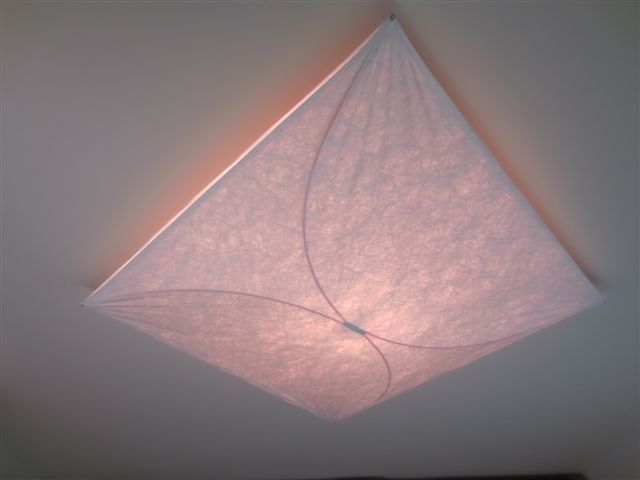
We also fitted this new ceiling lamp in the 500 room (Ariette by Flos) not excatly my cup of tea but it might help with room acoustics being like a big canvas
Regards
Roberto
Posted on: 25 March 2017 by hungryhalibut
Just you wait till it's full of dead flies once summer arrives...
Posted on: 25 March 2017 by Bert Schurink
Just saw this and was intrigued....
Tokyo’s classical music cafes are time capsules for audiophiles BY JAMES HADFIELD MAR 24, 2017 ARTICLE HISTORY PRINT SHARE In this age of musical abundance, it’s hard to fathom that an LP once cost the equivalent of a few days’ wages in Japan. In the 1950s, audiophiles who couldn’t afford to buy their own music did their listening at coffee shops known as meikyoku kissaten (“musical masterpiece cafes”), which boasted high-end audio gear and extensive libraries of classical or jazz records.
Though they outlived their usefulness long before the arrival of YouTube and Spotify, a handful of these kissaten have endured. Their anachronism is part of the charm: They conjure an atmosphere of reverence that’s more befitting of a church than a coffee shop. At a few of them, you’ll get shushed if you try to have a conversation; it’s better to bring a book, sit back, and forget the bustle of the outside world for a few hours.
Though Tokyo’s most famous meikyoku kissaten is undoubtedly Lion, in Shibuya, some of the best examples can be found along the JR Chuo Line. For decades, the go-to place was Classic, a dilapidated cafe in Nakano that was known for its wonky floors and eccentric panoply of antiques. Its owner, a painter named Shichiro Misaku, opened Classic in 1945 after his previous kissaten in neighboring Koenji, Renaissance, was destroyed by wartime bombing.
Misaku passed away in 1989, and Classic soldiered on for another 16 years before finally closing in 2005. At which point something unusual happened: A pair of the cafe’s former staff resurrected it in Koenji, complete with the original furnishings. In a neat twist, they named the new place Renaissance.
The split-level basement space has been open since 2007, yet evokes the aura of being far older. It teems with a bewitching assortment of decorative clutter: lamps, paintings, Grecian busts, a reel-to-reel projector and a dozen-odd clocks, none of them working. As was the policy at Classic, customers get a choice of just three drinks — coffee, tea or juice — and can write their musical requests on a blackboard.
You can find another shrine to Classic one stop further along the Chuo Line, at Asagaya’s Violon. Owner Kenji Teramoto befriended Misaku when he first moved to Tokyo as a young man in the late ’70s, but since Classic only employed women, he ended up opening his own place instead.
He modeled the interior on Vienna’s Musikverein and London’s Wigmore Hall; squint hard enough and you can just about see the resemblance. While Violon plays records during the daytime, over a speaker system that Teramoto built himself, it also hosts live recitals each evening. Order coffee, and the staff will offer to spike it with a few drops of brandy.
The walls are adorned with Misaku’s art, which he painted in a studio on the floor above Classic. Teramoto diligently preserved his old mentor’s work, and is coordinating a joint exhibition in April to mark the 110th anniversary of his birth. The show will be split between Violon, Renaissance and Denen, a 60-year-old Kokubunji cafe that also had strong ties with Classic. It’s a touching tribute. The old master may be gone, but the music carries on.
Posted on: 25 March 2017 by HiFiman
Sorry about the picture quality.
Since my previous system picture last year I have changed the UQ/100 to a 272/100
Setup: 272/100, AE301 speakers, NAC A5, Heed Quester phono stage and Michell GyroDec SE with DV-20X2
Left speaker looks like its toed out but both are toed in, strange...
Posted on: 25 March 2017 by Marksnaim
Bert, fascinating. Thanks for posting that.
Posted on: 25 March 2017 by rsch
Hungryhalibut posted:
Just you wait till it's full of dead flies once summer arrives...
No flies here HH
Posted on: 25 March 2017 by Klyde
Bert Schurink posted:
Just saw this and was intrigued....
Tokyo’s classical music cafes are time capsules for audiophiles BY JAMES HADFIELD MAR 24, 2017 ARTICLE HISTORY PRINT SHARE In this age of musical abundance, it’s hard to fathom that an LP once cost the equivalent of a few days’ wages in Japan. In the 1950s, audiophiles who couldn’t afford to buy their own music did their listening at coffee shops known as meikyoku kissaten (“musical masterpiece cafes”), which boasted high-end audio gear and extensive libraries of classical or jazz records.
Though they outlived their usefulness long before the arrival of YouTube and Spotify, a handful of these kissaten have endured. Their anachronism is part of the charm: They conjure an atmosphere of reverence that’s more befitting of a church than a coffee shop. At a few of them, you’ll get shushed if you try to have a conversation; it’s better to bring a book, sit back, and forget the bustle of the outside world for a few hours.
Though Tokyo’s most famous meikyoku kissaten is undoubtedly Lion, in Shibuya, some of the best examples can be found along the JR Chuo Line. For decades, the go-to place was Classic, a dilapidated cafe in Nakano that was known for its wonky floors and eccentric panoply of antiques. Its owner, a painter named Shichiro Misaku, opened Classic in 1945 after his previous kissaten in neighboring Koenji, Renaissance, was destroyed by wartime bombing.
Misaku passed away in 1989, and Classic soldiered on for another 16 years before finally closing in 2005. At which point something unusual happened: A pair of the cafe’s former staff resurrected it in Koenji, complete with the original furnishings. In a neat twist, they named the new place Renaissance.
The split-level basement space has been open since 2007, yet evokes the aura of being far older. It teems with a bewitching assortment of decorative clutter: lamps, paintings, Grecian busts, a reel-to-reel projector and a dozen-odd clocks, none of them working. As was the policy at Classic, customers get a choice of just three drinks — coffee, tea or juice — and can write their musical requests on a blackboard.
You can find another shrine to Classic one stop further along the Chuo Line, at Asagaya’s Violon. Owner Kenji Teramoto befriended Misaku when he first moved to Tokyo as a young man in the late ’70s, but since Classic only employed women, he ended up opening his own place instead.
He modeled the interior on Vienna’s Musikverein and London’s Wigmore Hall; squint hard enough and you can just about see the resemblance. While Violon plays records during the daytime, over a speaker system that Teramoto built himself, it also hosts live recitals each evening. Order coffee, and the staff will offer to spike it with a few drops of brandy.
The walls are adorned with Misaku’s art, which he painted in a studio on the floor above Classic. Teramoto diligently preserved his old mentor’s work, and is coordinating a joint exhibition in April to mark the 110th anniversary of his birth. The show will be split between Violon, Renaissance and Denen, a 60-year-old Kokubunji cafe that also had strong ties with Classic. It’s a touching tribute. The old master may be gone, but the music carries on.
I'd love to see this sort of idea taking off in UK. Seem to remember a picture on the web, of a bar in London, with Huge vintage Tannoy speakers. Does anyone know of any others like this?
Posted on: 25 March 2017 by Stevee_S
Bert Schurink posted:
Just saw this and was intrigued....
Tokyo’s classical music cafes are time capsules for audiophiles BY JAMES HADFIELD MAR 24, 2017 ARTICLE HISTORY PRINT SHARE In this age of musical abundance, it’s hard to fathom that an LP once cost the equivalent of a few days’ wages in Japan. In the 1950s, audiophiles who couldn’t afford to buy their own music did their listening at coffee shops known as meikyoku kissaten (“musical masterpiece cafes”), which boasted high-end audio gear and extensive libraries of classical or jazz records.
Though they outlived their usefulness long before the arrival of YouTube and Spotify, a handful of these kissaten have endured. Their anachronism is part of the charm: They conjure an atmosphere of reverence that’s more befitting of a church than a coffee shop. At a few of them, you’ll get shushed if you try to have a conversation; it’s better to bring a book, sit back, and forget the bustle of the outside world for a few hours.
Though Tokyo’s most famous meikyoku kissaten is undoubtedly Lion, in Shibuya, some of the best examples can be found along the JR Chuo Line. For decades, the go-to place was Classic, a dilapidated cafe in Nakano that was known for its wonky floors and eccentric panoply of antiques. Its owner, a painter named Shichiro Misaku, opened Classic in 1945 after his previous kissaten in neighboring Koenji, Renaissance, was destroyed by wartime bombing.
Misaku passed away in 1989, and Classic soldiered on for another 16 years before finally closing in 2005. At which point something unusual happened: A pair of the cafe’s former staff resurrected it in Koenji, complete with the original furnishings. In a neat twist, they named the new place Renaissance.
The split-level basement space has been open since 2007, yet evokes the aura of being far older. It teems with a bewitching assortment of decorative clutter: lamps, paintings, Grecian busts, a reel-to-reel projector and a dozen-odd clocks, none of them working. As was the policy at Classic, customers get a choice of just three drinks — coffee, tea or juice — and can write their musical requests on a blackboard.
You can find another shrine to Classic one stop further along the Chuo Line, at Asagaya’s Violon. Owner Kenji Teramoto befriended Misaku when he first moved to Tokyo as a young man in the late ’70s, but since Classic only employed women, he ended up opening his own place instead.
He modeled the interior on Vienna’s Musikverein and London’s Wigmore Hall; squint hard enough and you can just about see the resemblance. While Violon plays records during the daytime, over a speaker system that Teramoto built himself, it also hosts live recitals each evening. Order coffee, and the staff will offer to spike it with a few drops of brandy.
The walls are adorned with Misaku’s art, which he painted in a studio on the floor above Classic. Teramoto diligently preserved his old mentor’s work, and is coordinating a joint exhibition in April to mark the 110th anniversary of his birth. The show will be split between Violon, Renaissance and Denen, a 60-year-old Kokubunji cafe that also had strong ties with Classic. It’s a touching tribute. The old master may be gone, but the music carries on.
ThanksBert that's a good find and post. I had no idea any such place(s) ever existed in Japan.
Posted on: 25 March 2017 by Streamz
Jeroen20 posted:
Interesting, that rack looks like my old Target rack I sold about 12 years ago. Originally it was black, with in each level a black laminated shelf. I've had the white glass shelves made up at a local glass shop, sandblasted at one side. It did have loudspeaker type of spikes though.
Posted on: 25 March 2017 by TOBYJUG
rsch posted:
Regards
Roberto
Almost like where my sun doesn't shine. WHY ?
Posted on: 25 March 2017 by Skip
elkman70 posted:
552DR and full SL loom added this year, plus a load of music.
This is way cool looking. I noted the Fraim glass under the 552DR in a novel solution. I have to believe this would sound much better on a Fraim. Perhaps you have rejected that idea. I love my IsoBlue but my Fraim wins.
Posted on: 25 March 2017 by Skip
ULRIKL posted:
Little bigger looks better
Congratulations on the nSub! I have had a WTB on a Cherry model for 10 years in the US.
Do those big middle boxes warm the room? It is nice how they match the system.


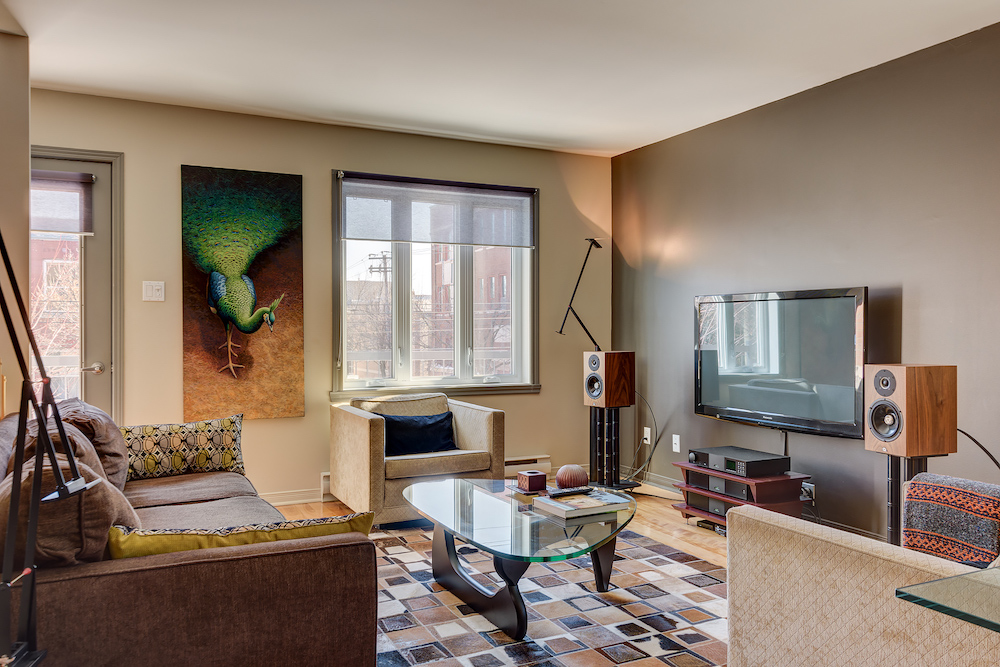




552DR and full SL loom added this year, plus a load of music.